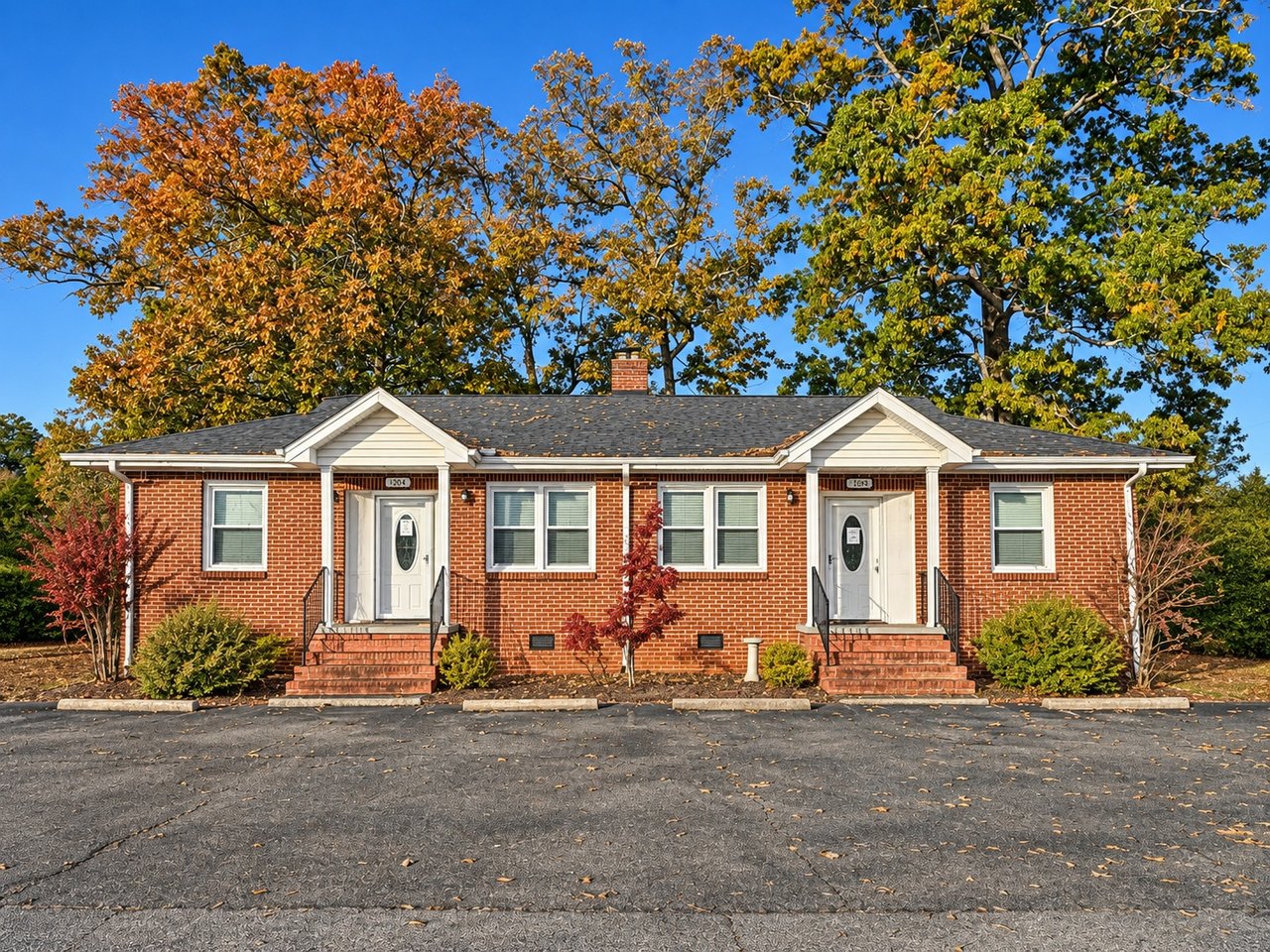
At Cedar Gap in Fountain Inn, D.R. Horton is advertising a 5.50% fixed FHA rate. Two Thursdays ago, Freddie Mac put the national 30-year fixed average at 7.18%. The rate comes with conditions. You have to finance through D.R. Horton's affiliated lender, the contract has to be signed on or after October 5, 2026, and the loan has to close by January 29, 2027.
That kind of deal decides more new-versus-resale comparisons around Simpsonville this season than any list price does. It also never appears in the market numbers buyers use to judge prices. In Simpsonville this winter, a new home's largest discount is built into the loan, so comparing a new build and a resale home on price alone gets both of them wrong.
Every Offer Comes With a Lender and a Deadline
The builders working in and around Simpsonville are all marketing their financing more loudly than their floor plans. Here is how the current offers line up as of mid-November 2026.
| Builder | Communities named | Advertised offer | Strings attached |
|---|---|---|---|
| D.R. Horton | Cedar Gap and Durbin Meadows, Fountain Inn | 5.50% FHA (6.212% APR); 5.99% conventional (6.453% APR) | Must use DHI Mortgage for the rate; contract on or after 10/05/2026, close by 01/29/2027; principal residence only |
| Dream Finders Homes | The Settlement and Braxton Ridge, Simpsonville; Briargate, Fountain Inn | 2/1 FHA buydown at 2.99%, 3.99%, then 4.99% | Must use Jet HomeLoans for the offer; select homesites; loans closed on or before 12/31/2026 |
| Ryan Homes | Canterbrook Farms, Fountain Inn | 5.5% rate (6.247% APR) advertised for townhomes | Conditions are not spelled out in the advertisement |
| Lennar | Laurens Glen, Simpsonville; Stoneledge Cottages, Fountain Inn | Black Friday promo with a 4.500% FHA 5/1 ARM and credits | Signing window ran 11/2/26 to 11/8/26 and has closed |
The fine print on D.R. Horton's Cedar Gap page explains how its rate works. The builder "has locked-in, through DHIM, a fixed interest rate for a pool of funds," and the rate is available "until pool of funds is depleted or rate expires." The same disclosure says the rate may require the borrower to pay points and may not combine with other D.R. Horton offers. In other words, the builder bought a block of below-market money in advance and is passing it out one closing at a time. Once the pool runs out, the deal ends.
Both D.R. Horton and Dream Finders say you can buy one of their homes without using their lender. You just don't get the advertised rate if you go elsewhere. That puts a buyer's choice of lender and choice of house in the same decision before the first showing.
The closing deadlines matter too. If you're reading this on November 19, the Dream Finders offer requires your loan to close within about six weeks, before the end of December. Only homes that are already built or nearly finished can realistically make that date. That helps explain the markdowns on finished inventory. D.R. Horton lists Cedar Gap as "Final Opportunities," and at its Durbin Meadows community it features a quick-move-in home on Deskin Lane at $256,900, reduced from $281,990. Dream Finders shows quick-move-in townhomes at The Settlement with savings of $10,000 and $27,000, and a Briargate home with $19,000 in savings.
Why the Headline Prices Never Show Any of This
If a builder pays for your rate, the sale price stays the same. The discount is recorded as financing, so it doesn't show up when anyone reads the market from the price data.
The Greater Greenville Association of REALTORS® report for September 2026, current as of October 10, puts the region's median sales price at $324,900. That's up 1.5% from a year earlier. Homes took an average of 59 days to reach an accepted offer, and sellers received 98.0% of list price. The report defines its median as the midpoint price "not accounting for seller concessions." A home that closes at full price with a builder-funded rate cut looks like a full-price sale in that report.
Read with that in mind, the rest of the September 2026 report shows a market that gives buyers more room. Inventory reached 6,639 homes, up 9.2% from a year earlier. Months of supply rose 7.3% to 4.4, and days on market rose 9.3%. Prices barely moved while supply and selling time both grew. In that kind of market, a seller who wants to hold the price usually offers something else instead, and builders are offering it through the rate.
The "Simpsonville" Report That Isn't Simpsonville
Anyone looking up the local numbers will probably land on the South Carolina REALTORS® Local Market Update for Simpsonville, which shows startling figures for September 2026. The median sales price is up 13.7% to $396,750, and days on market are up 162.5% to 147.
Those figures rest on two closed sales. The page is produced by the Western Upstate Association of REALTORS® and counts only Simpsonville sales that went through that MLS. Year to date through September 2026, that adds up to 70 closings. The report itself warns that its percent changes "can sometimes look extreme due to small sample size." It also flags that its median does not account for concessions or down payment assistance. For a sense of the overall market, the Greater Greenville regional report is the sturdier source.
A 2.99% Rate Is Really a Payment Schedule
The low number in a buydown is the first step of a three-year climb. Dream Finders' own example uses a $400,000 FHA purchase, and its monthly payments, including mortgage insurance, rise like this:
- Year 1 at 2.99%: $1,829 a month
- Year 2 at 3.99%: $2,048 a month
- Years 3 through 30 at 4.99%: $2,282 a month
The disclosed APR is 5.959% in all three periods, which reflects the loan as a whole rather than the first-year rate. The permanent 4.99% comes from what the disclosure on Dream Finders' Greenville sales event page calls "a builder paid forward commitment to buydown the market rate." That offer is limited to government loans on primary residences. On conventional loans, Fannie Mae's temporary buydown guideline requires borrowers using a temporary buydown to qualify at the note rate, not the lower introductory rate. On a conventional loan, then, a lower first-year payment doesn't increase how much a buyer can be approved to borrow.
D.R. Horton's example at Cedar Gap is a $334,990 home. It comes to $2,353 a month with the FHA rate and 3.5% down, or $2,345 a month with the conventional rate and 5% down. Both figures include estimated taxes, insurance, mortgage insurance and HOA dues.
The 7.18% Freddie Mac average describes conventional loans with 20% down and excellent credit, so it doesn't compare directly with an FHA offer. The direction of the gap still matters. A year ago the same survey averaged 6.22%, so market rates have risen nearly a full point. That rise is what makes a builder's rate subsidy worth more this fall than a similar-sized price cut would have been last fall.
What a Resale Seller Can Put on the Table
A resale owner in Simpsonville competing against these offers can use some of the same tools, within limits set by the loan programs. A seller can pay toward the buyer's closing costs or toward a rate buydown, and each program caps the total.
- Conventional loans backed by Fannie Mae: On a principal residence or second home, contributions are capped at 3% of the price when the loan-to-value ratio is above 90%, 6% between 75.01% and 90%, and 9% at 75% or below. Investment properties are capped at 2%. A seller-paid temporary or permanent buydown counts toward the cap. The Fannie Mae Selling Guide calculates the cap on the lower of the sales price or the appraised value.
- FHA loans: Interested parties can contribute up to 6% of the sales price toward origination fees, closing costs, prepaids and discount points, and buydowns count within that 6%, according to HUD's FHA guidance. Anything above the limit reduces the property's adjusted value dollar for dollar.
- VA loans: Seller concessions are limited to 4% of the home's reasonable value. The VA's closing cost page lists discount points among the closing costs buyers and sellers can negotiate.
None of these caps depend on who the buyer's lender is, and none come with a builder's closing deadline. A resale seller can offer them to whichever lender the buyer has already chosen. That is the main practical difference from the builder programs, which tie the subsidy to their affiliated lender.
Every one of these rules has conditions that depend on the buyer's loan and the seller's situation. Treat this as general information, not legal, tax or financial advice, and confirm the details with your lender, attorney or tax professional.
Quick Answers
Is the Lennar Black Friday deal still available? Not on the published terms. Lennar's promotion required a contract signed between November 2 and November 8, 2026. Lennar still lists Laurens Glen in Simpsonville and Stoneledge Cottages in Fountain Inn as actively selling.
Do I have to use the builder's lender? Not to buy the house. D.R. Horton and Dream Finders both say you do need their affiliate to get the advertised rate.
Which market numbers are newest? As of publication, the newest published regional and local reports cover September 2026 and are marked current as of October 10, 2026.
Builder offers change week to week, and a resale listing usually has more room to negotiate than its price suggests. At Locke & Key Associates, we can put a builder's rate offer next to a resale home with a seller credit and compare what each one actually costs you by the month, before your offer goes in. Let's talk about your home.