Most sellers have heard about open houses, social media boosts, and syndication to the big home-search sites. Those matter. But reverse prospecting is different: it’s MLS-powered, buyer-intent-driven marketing that helps a listing agent proactively connect a home with buyers who are already searching for something exactly like it.
Let’s break it down in plain English—and then I’ll show you how we run it at Locke & Key Associates to create more showings, more urgency, and better outcomes for sellers.
What Is Reverse Prospecting?
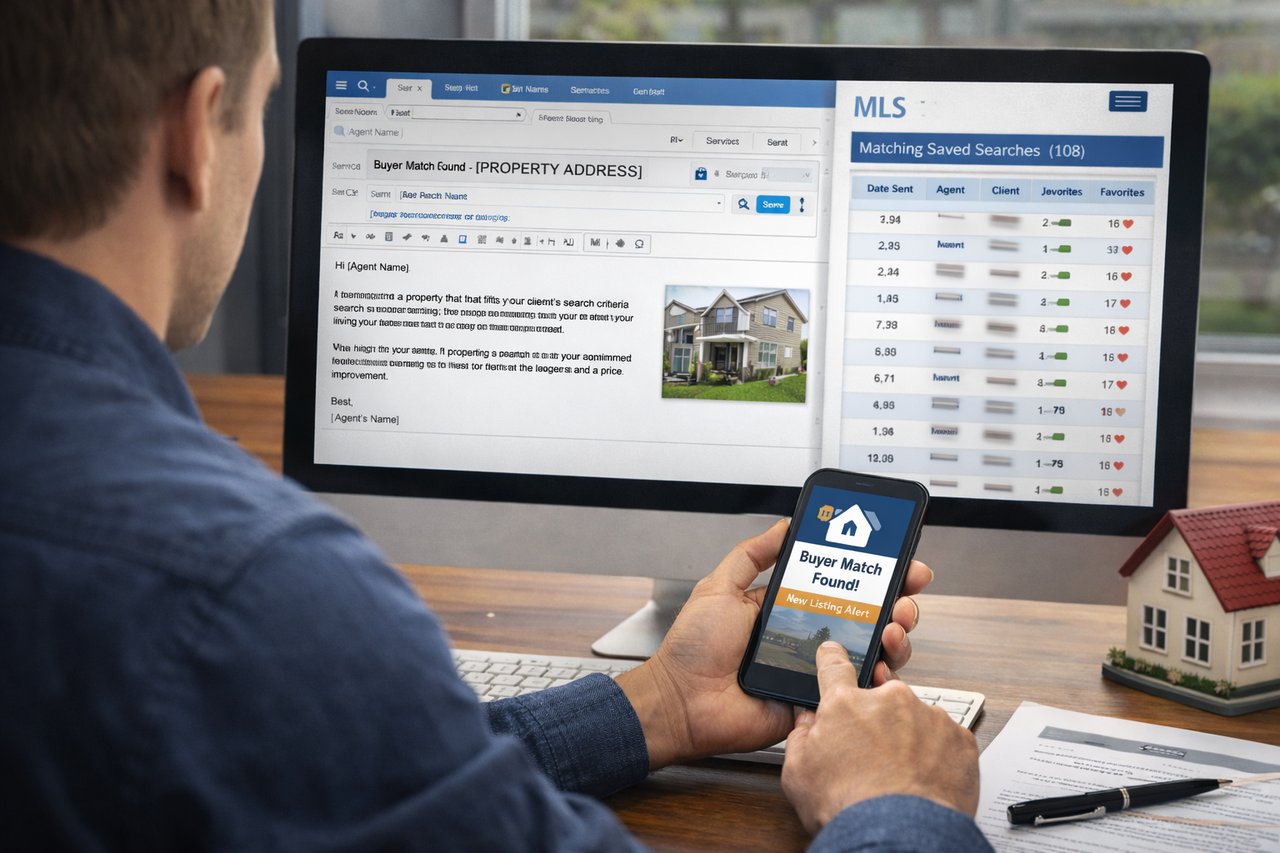
Reverse prospecting is an MLS function that allows the listing agent to identify buyer agents whose clients have saved searches / auto-emails that match the listing’s criteria—then reach out directly to those agents to start a conversation.
In other words:
-
Normal prospecting: “I have a buyer… let me find them a house.”
-
Reverse prospecting: “I have a house… let me find the buyers already searching for it.”
Most MLS systems keep the buyer’s identity private, but the tool can show helpful context like:
-
which agents have matching saved searches,
-
when the listing was sent to a client,
-
and sometimes whether the client “favorited” it (heart) or marked it as a possibility.
That last part matters because it reveals real buyer engagement, not just online window shopping.
Why Reverse Prospecting Works (Efficacy + Stats)
Reverse prospecting is effective because it lines up with how buyers actually behave today:
1) Buyers start online—and they’re searching constantly
NAR has reported that 97% of homebuyers used the internet in their home search.
So buyers aren’t waiting for a yard sign—they’re living inside search filters, alerts, and listing notifications.
2) Agents are still central to the transaction
In NAR’s 2025 highlights, 88% of homebuyers purchased through an agent or broker.
That means the fastest path to serious buyers is often agent-to-agent, not “post and pray.”
3) The median search window is long enough to build leverage—if you get in early
Buyers spent a median of 10 weeks searching for a home.
That’s a long time for a buyer to compare options—so your listing needs to hit their radar early and often, especially when it’s new or improved.
4) The outreach is highly targeted, which tends to lift engagement
Email performance varies by list quality, but realtor.com’s agent marketing benchmarks suggest 35–40% open rate is a strong target for real estate emails, with 2–5%+ click-through rate as an industry standard. Reverse prospecting is one of the best ways to earn those kinds of results because the message is relevant by design: you’re contacting agents whose clients’ criteria already match the home.
Bottom line: Reverse prospecting doesn’t replace great pricing, photos, and exposure. It amplifies them—by pushing your listing directly toward active, qualified demand.
When Reverse Prospecting Is Most Powerful
In our experience, reverse prospecting shines in a few moments:
-
Launch week (when the listing is “fresh”)
-
After a price improvement
-
After a major update (new roof, repairs completed, fresh paint, staging, etc.)
-
When a home is hard to categorize online (unique layouts, acreage, multi-gen spaces, workshops, etc.)
-
When inventory shifts and buyers suddenly have more options (you want to create urgency and clarity)
How We Do Reverse Prospecting at Locke & Key Associates
Here’s our practical, repeatable process—built for real results, not busywork:
1) We prep the listing so it converts before we push it
Reverse prospecting works best when the listing is “ready to say yes”:
-
strong photos + clean data fields in MLS (beds, baths, features, HOA notes, school zones)
-
clear showing instructions
-
a tight description that answers buyer objections up front
Because if we successfully find the right buyer—and the listing presentation is weak—we waste the advantage.
2) We run reverse prospecting shortly after activation
Once the home is active in MLS, we run reverse prospecting to see which agents have matching buyer searches and whether the listing has already been sent through auto-emails.
3) We prioritize the most likely matches (not just the biggest list)
Not all matches are equal. We focus on:
-
recent “date sent” indicators
-
agents with clients actively engaging (favorites/possibilities where available)
-
agents known for producing in that price band and area
4) We send a short, specific message to the buyer’s agent
This is key: reverse prospecting is not a spam blast.
Our message typically includes:
-
why the home matches (specific: schools, lot size, main-level living, workshop, etc.)
-
what’s new (price improvement, repairs, incentives, preferred closing timeline)
-
the cleanest next step: “Want a private tour slot this week?” or “Any feedback I can answer before your client writes off this option?”
The MLS tool itself supports agent-to-agent contact and tracks history in many systems.
5) We log it and follow up like professionals
Reverse prospecting only matters if you follow through:
-
We track outreach and responses
-
We use feedback to adjust strategy (price, concessions, showing setup, listing language)
-
We re-run reverse prospecting after meaningful changes (price, condition, terms)
6) We turn the data into seller-facing strategy
This is the part most people miss.
Reverse prospecting can help answer:
-
“Are buyers in this bracket active right now?”
-
“Is the home being favorited or ignored?”
-
“Do we need a pricing adjustment—or a presentation adjustment?”
It’s not just marketing. It’s market intelligence.
What Reverse Prospecting Can’t Fix (And What It Can Fix)
Reverse prospecting can’t overcome:
-
unrealistic pricing
-
major condition issues with no plan
But it can fix:
-
low awareness (the right buyers simply haven’t seen it yet)
-
slow agent-to-agent discovery
-
momentum loss after the initial launch window
-
“we need more conversations, not more views”
The Seller Takeaway
Reverse prospecting is one of the most underused, high-leverage tools a listing agent can run because it goes straight to active buyer intent—the people already searching, already saved, already watching.
At Locke & Key Associates, we use it as part of a bigger strategy:
-
make the listing convert,
-
get it in front of the right demand fast,
-
and use feedback + data to protect your leverage.
If you’re thinking about selling in Anderson and the Upstate, ask me for our Listing Launch Blueprint—and I’ll show you exactly how we combine pricing strategy, presentation, and MLS intelligence (including reverse prospecting) to attract stronger offers with less stress.
If you want, tell me your target area (Anderson, Powdersville, Seneca, etc.) and price range, and I’ll also add a short “What reverse prospecting looks like in our local market” section to make this blog even more location-specific.
#reverseprospecting #realestatemarketing #mlssearch #buyeralerts #listingstrategy #homesellingtips #sellmyhome #realestateagent #listingagent #andersonsc #upstatesc #greenvillesc #senecasc #powdersvillesc #lakehartwell #southcarolinarealestate #kellerwilliams #lockeandkeyassociates #realestateleads #showings #offerstrategy #pricedright #listinglaunch #market