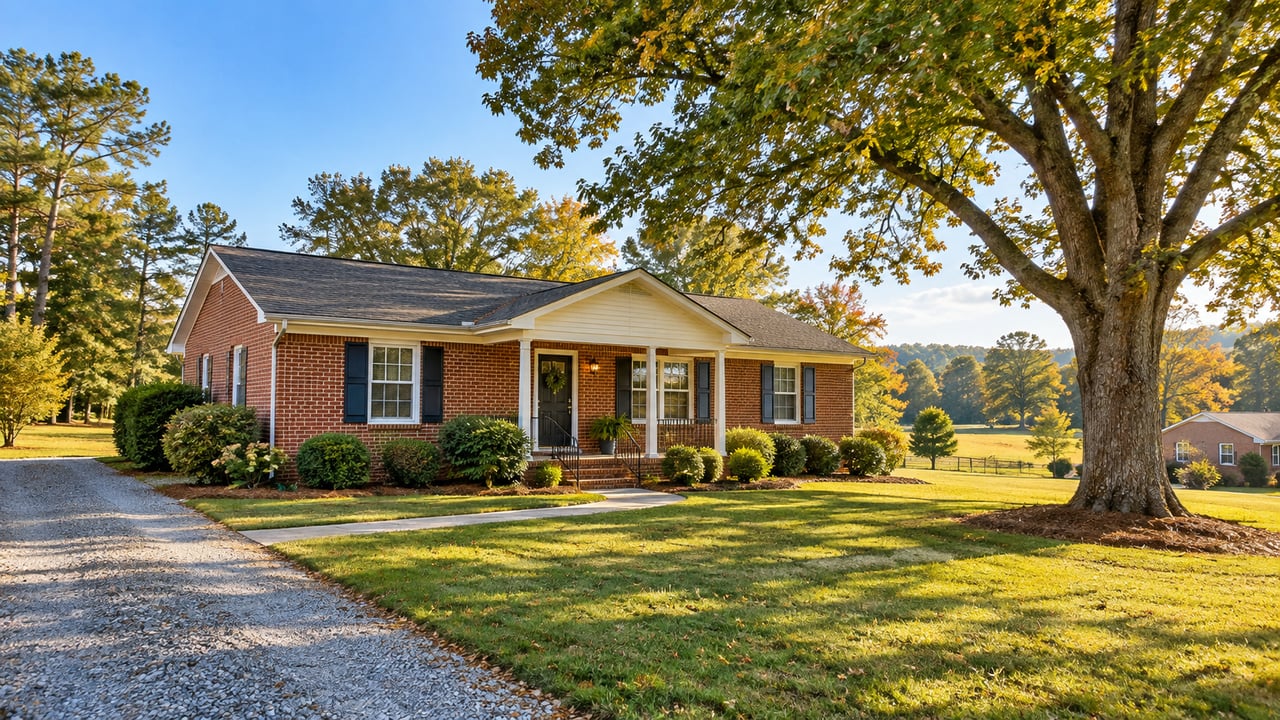
If you live on one of Easley’s rolling Piedmont hillsides, you know how a good Upstate thunderstorm can turn a pretty slope into a channel for rushing water. You want curb appeal and shade, but you also want your soil to stay put and your foundation to stay dry. This guide walks you through tree choices, root protection, and drainage features that work with our local soils and rainfall so your landscape looks great and functions even better. Let’s dive in.
Why Easley slopes act differently
Easley sits in a humid subtropical climate with year-round rain and occasional heavy storms. On a slope, water moves fast and can cut rills or gullies if it is not slowed and spread. Many Piedmont lots have clayey subsoils that limit infiltration, so runoff can collect and accelerate. Vegetation, smart grading details, and well-placed green infrastructure keep that energy in check.
Before you make big changes, check for permits. Major grading, work near streams, or tying into public storm systems may require approval from state and local offices. Start by contacting the City of Easley Public Works and Pickens County stormwater or planning staff to understand what applies to your property.
Choose the right trees
What to plant on Piedmont slopes
Trees are your first line of defense. Their roots hold soil, canopies slow rainfall, and healthy shade improves comfort and value. Favor native or well-adapted canopy species with strong, fibrous root systems such as oaks and hickories, along with some pines where appropriate. For seasonal interest and structure, add native understory trees like dogwood, redbud, and serviceberry.
Keep larger trees a sensible distance from foundations, driveways, and utilities to reduce conflicts. Avoid planting species with aggressive, shallow root habits next to hardscape or pipes. If in doubt about species or placement, plan with an ISA-certified arborist for site-specific guidance.
Layered planting for stability
Think in layers to cover the slope from top to bottom. Combine canopy trees with understory shrubs and native groundcovers to protect soil at multiple depths. This layered approach slows sheet flow, shields bare ground, and helps water soak in gradually. It also creates a more natural, attractive look that adds curb appeal year round.
Protect root zones from day one
Tree Protection Zone basics
During any project, guard the roots you have. Set up a Tree Protection Zone that at least covers the dripline or a conservative radius around the trunk. Keep equipment, stockpiles, and foot traffic out of this area to limit compaction and root damage. Avoid cutting large roots, especially on the downhill side where loss of anchoring roots can destabilize a tree on a slope.
If you must work near roots, consult an ISA-certified arborist. They can help you minimize cuts, plan routes, and reduce risk to both the tree and the slope.
Planting and mulch that help soil
Plant trees at the correct depth with the root flare visible at or slightly above finished grade. Keep the planting hole no deeper than the root ball and wider than the container or burlap to help roots push into compacted soil. Add a wide ring of organic mulch 2 to 4 inches deep to conserve moisture and reduce surface compaction. Do not pile mulch against the trunk.
During the first two to three years, hand-water to support establishment, especially after hot or dry spells. On steep, bare spots, use temporary erosion control like straw, wattles, or coir matting to hold soil until vegetation fills in.
Pruning for structure and safety
Follow ISA standards for structural pruning to remove dead or diseased wood and build good branch form. Avoid topping. Late winter or early spring is a common window for structural pruning in our region, though timing can vary by species. On wind-exposed slopes, selective crown reduction done by a professional can reduce stress, but protecting root zones is the most important stability measure.
Smarter drainage on slopes
Swales that follow the contour
A grassed or planted swale is a shallow, broad channel that intercepts runoff and moves it slowly. On a slope, swales work best when they track along the contour rather than straight downhill. This spreads flow, lowers velocity, and encourages infiltration. Use one or more swales to intercept water at mid-slope and direct it toward safe outlets.
Keep swale side slopes gentle, with stable vegetation that can be mowed or spot-trimmed. Plan overflow routes for large storms that bypass vulnerable areas and do not push water toward neighboring properties.
Rain gardens and bioswales
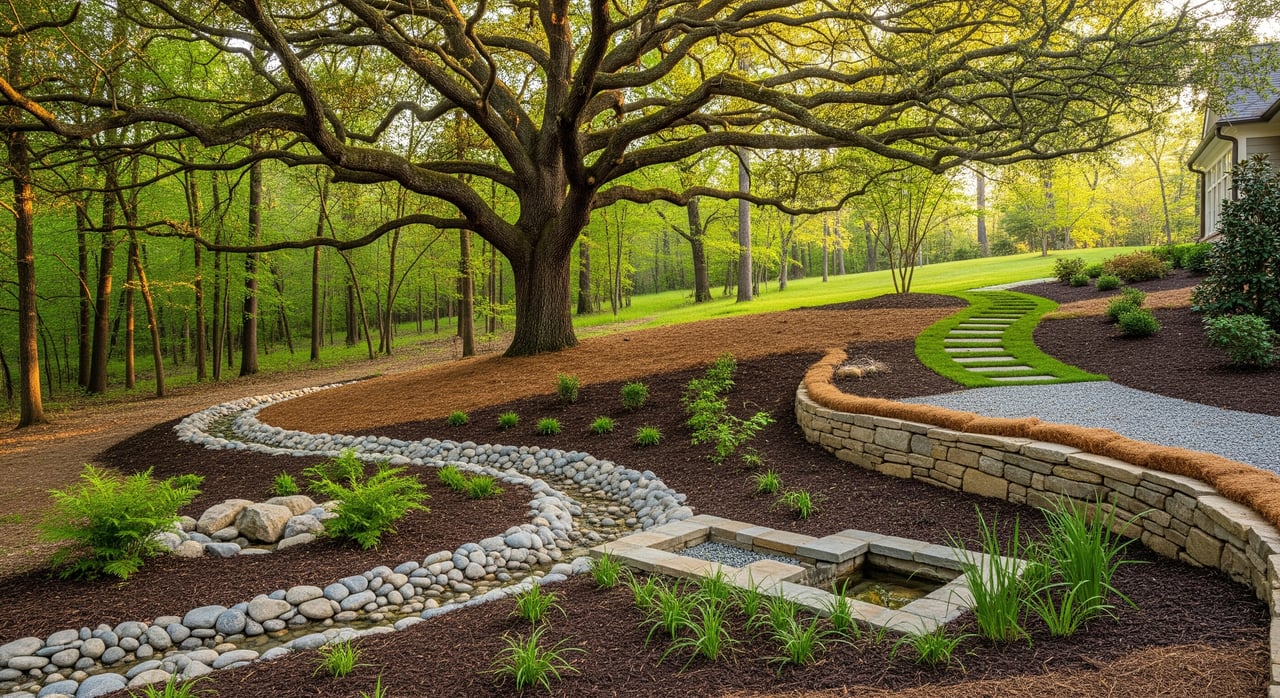
Bioswales and rain gardens combine engineered soils with native plants to slow water, filter sediment, and promote infiltration. In clay-prone Piedmont soils, these features may need amended media and sometimes underdrains to prevent prolonged saturation. A simple, shallow rain garden at the base of a swale can create a visually pleasing focal point that also handles roof or patio runoff.
Choose plants that tolerate periodic wetting and drying. Place these features where they will intercept water before it reaches your foundation or erodible slope toes.
Level spreaders and small check dams
Where you have higher-energy flows, a level spreader disperses water across a wider area. In a residential swale, small stone or wood check dams can break the grade, slow water, and capture sediment. Space them so that each dam backs water up just enough to flatten the flow, not to hold a permanent pool.
Downspouts and permeable surfaces
Disconnect downspouts from long, hard pipes that send water to the street. Instead, direct roof runoff into a vegetated swale or rain garden where it can soak in. If you are resurfacing a drive or patio, consider permeable paving in select areas to reduce runoff volume and ease pressure on your slope.
Blend curb appeal with function
You can make drainage look intentional. Plant native ornamental grasses, flowering perennials, and low shrubs along swale edges for four-season texture and color. Use natural stone, boulders, or low step features to define transitions and guide the eye. Keep sight lines open for safety and create clear mowing edges so maintenance stays simple.
A well-designed swale or rain garden should read as a crafted landscape element, not a ditch. The result is a property that feels finished and elevated while working hard behind the scenes.
Maintenance made simple
Healthy systems perform best with light, regular care. After storms, inspect swales for sediment buildup, erosion, or blockages. Clear inlets and outlets, and replant bare spots promptly to prevent rills from forming. Keep invasive species in check so desired plants have room to thrive.
Follow a simple schedule:
- Year 0 to 3: Water new trees regularly. Check tree guards and protection monthly. Inspect swales after big rains and remove weeds.
- Annually: Prune out deadwood, refresh mulch, and mow or trim swale vegetation as needed. Look for new signs of concentrated erosion and clear debris.
- Every 3 to 5 years: Schedule structural pruning of mature trees with an ISA-certified arborist. Recheck root-zone conflicts with hardscape. Verify swale grading and repair stonework or check dams.
Budget and planning
Costs scale with complexity. Planting and a small, homeowner-built swale or rain garden can be cost-effective, with most expense in plants, mulch, and simple erosion-control materials. Engineered bioswales, larger grading, or slope stabilization require professional design and soils work, which increases cost and time. Build a small annual budget for pruning, vegetation replacement, and sediment removal to keep everything on track.
Who to call in Easley
Start with Clemson Cooperative Extension for soil testing, native plant ideas, and homeowner guidance. For tree health, placement, and root protection, consult an ISA-certified arborist who knows Piedmont soils and slope dynamics. If you plan larger grading, drainage work that affects neighbors, or connections to storm systems, engage a civil engineer experienced in residential stormwater.
Before you implement permanent drainage structures, contact City of Easley Public Works and Pickens County planning or stormwater offices to clarify permitting and local standards.
Homeowner kickoff checklist
Use this quick list to brief a designer or contractor and speed up your project:
- Map your site: slopes, existing trees with trunk diameters, drainage paths, utilities, and hardscape. Note any active erosion or slope movement.
- Define goals: curb appeal elements like focal trees and seasonal color, plus functional goals like intercepting roof runoff and preventing downslope erosion.
- Ask for: a soil infiltration test, a grading plan with swale locations and overflow routes, a tree protection plan with TPZ fencing, and a plant palette of native or well-adapted species.
- Plan maintenance: include an operation and maintenance plan for the first 3 to 5 years.
- Confirm permits: decide who will handle any required local or state permits.
Permits and neighbor-friendly drainage
Design with the whole block in mind. Do not concentrate flows toward a neighbor or directly against your foundation. Provide safe overflow paths for larger storms so temporary backups do not become damage elsewhere. When in doubt, pause and ask local stormwater staff what is acceptable for your street and lot type.
The bottom line
On Easley’s Piedmont slopes, the winning formula is simple. Protect and layer your trees, follow the contour with vegetated swales, and give water places to slow down and soak in. Pair those moves with a tidy maintenance rhythm and you will boost curb appeal, protect your investment, and keep your slope stable through our heaviest rains.
Ready to put a plan together or coordinate vetted pros who can help? Let’s talk about how to present and protect your property so it shows beautifully and functions even better. Reach out to Locke & Key Associates. Let’s talk about your home.
FAQs
What makes Easley’s Piedmont slopes prone to erosion?
- Frequent rain, occasional intense storms, and clayey subsoils increase runoff speed, which can cut rills and gullies if vegetation and drainage are not managed.
Which tree species work well for slope stability in Easley?
- Favor native or well-adapted canopy trees like oaks and hickories, some pines where suitable, and understory trees such as dogwood, redbud, and serviceberry.
How close can I plant trees to my foundation on a slope?
- Keep larger trees a sensible distance to limit root conflicts; exact spacing depends on species and site. Plan layout with an ISA-certified arborist.
What is a swale and where should it go on my lot?
- A swale is a shallow vegetated channel that slows and conveys runoff. Place it along the contour to intercept flow and direct it to safe, stable outlets.
Do rain gardens work with Piedmont clay soils?
- Yes, with the right design. Many require amended media and sometimes underdrains to avoid long-term saturation while still slowing and filtering water.
Can I prune roots to install a patio or swale?
- Severing major roots can destabilize a tree, especially on slopes. Minimize cuts and involve an ISA-certified arborist to protect the remaining root zone.
Do I need a permit to change drainage on my property?
- Possibly. Contact City of Easley Public Works and Pickens County planning or stormwater offices before major grading or connecting to public systems.